
Orange Cats Rock!
Browse our list of available orange kitties below, which is updated frequently as more become available for adoption, so please check back often! If a kitty piques your interest, fill out an adoption application. For more information on our adoption process and the medical vetting provided to our cats and kittens, please visit the adoption FAQ.
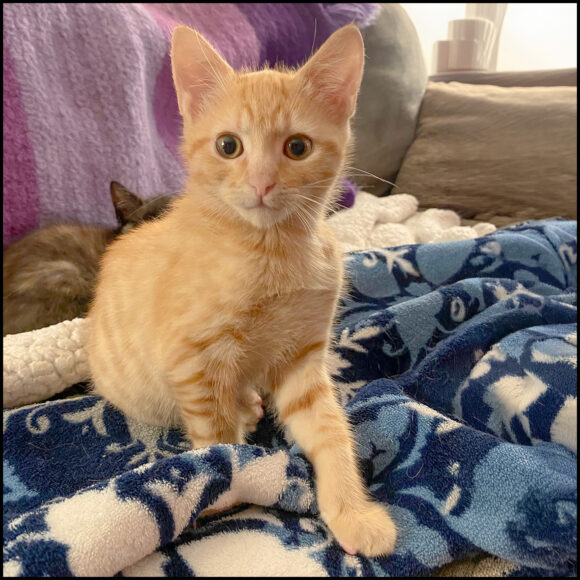
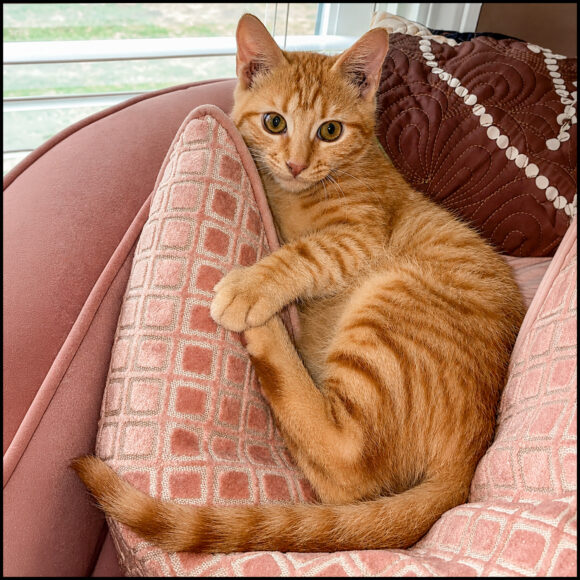

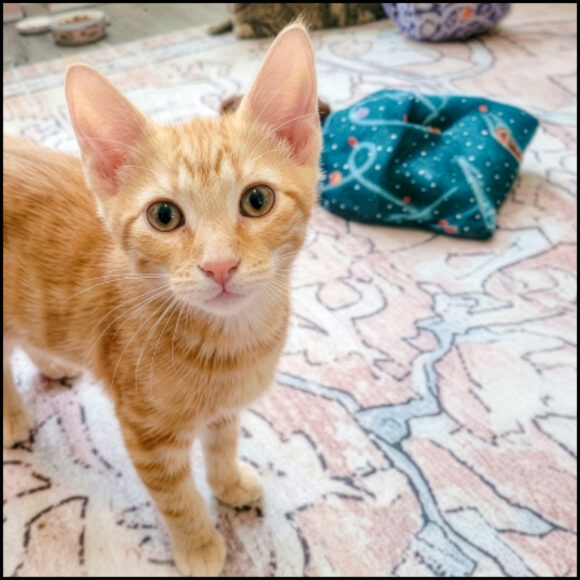


Orange tabbies are known for their engaging personalities, playful antics, and striking coats, making them cherished companions in so many households. Our rescue founder really adores orange cats. She believes they have special, unique purrsonalities, and there is not a bad one in the bunch! Everyone needs one in their household. We have often joked that our rescue could be called “All About Orange Cats”!
We are revealing some fun facts about orange cats that show what makes them special and why they should be in your home.
Eighty percent of all orange cats are males. It all comes down to genetics. Females need two X chromosome genes – one from each parent – to have the marker for the orange coloring. Males have the XY chromosome genes so they only need one X chromosome gene to have the marker for the orange coloring. That is why it is more common for an orange cat to be male.
Orange cats have something in common with your red-headed friends. Similar to humans with red hair, orange cats have a specific pigment called pheomelanin that causes the orange coat color.
All tabby cats, including orange cats, have patterned coats caused by the agouti gene. This gene results in one of four possible tabby patterns: mackerel (tiger stripes), ticked (fur with alternating light and dark stripes), spotted, and classic (a swirled pattern).
Many people mistakenly believe that “tabby” is a specific breed when, in fact, it is a reference to the unique coat markings of all tabby cats. The word “tabby” originates from a striped silk made in Iraq.
All orange cats have a distinct “M” marking on their forehead. This infamous “M” shape has inspired many legends. Some say that Mother Mary kissed the cat to bless them for rocking baby Jesus to sleep. Another legend says that an orange tabby killed a snake for Muhammad, who then put his mark on the cat, but no one really knows for sure. The science-backed explanation is in their DNA. The trademark “M” marking is caused by the same gene that gives orange cats their tabby pattern.
Many orange cats develop little black specks on their nose, lips, and other parts of their skin. Their color is prone to these adorable freckles which is caused by a genetic condition caused lentigo (also common in calico and tortoiseshell cats). Lentigo increases in the number of pigment-producing cells, causing the freckles. While Lentigo is not a cause for concern, if you notice any changes in their freckles, please contact your vet.
Orange cats are known for their good appetites and substantial build. Orange male cats tend to be a little larger than their non-orange counterparts. A greater size allows more dominance in the cat hierarchy and leads to more mating opportunities where they can beat out their competition. This appears a consistent feature of polygynous mammal societies. Cats are primarily polygynous, meaning that male cats often mate with multiple females during their breeding cycles. Orange cats appear more in rural and farm cat communities. Dense urban areas put the aggressive and larger orange cat at a disadvantage because they are prone to fighting and at greater risk of road trauma.
Across many cultures, orange cats are viewed as a symbol of good fortune and a bringer of positive energy. This association has deep historical roots, most notably in Ancient Egypt where their distinctive color was associated with the sun god Ra. The cat’s warm, vibrant color was seen as a direct link to the sun, a powerful symbol of joy, abundance, and success. In Japan, orange cats are believed to bring good luck and prosperity to their owners.
Ginger Cat Appreciation Day: celebrated on September 1, honoring the unique charm of orange cats, also known as ginger or marmalade cats. This day encourages cat lovers to appreciate these affectionate and playful felines.
Here are some famous orange cats from movies, TV, and more:
- Garfield, one of the most famous orange tabby cats, debuted in American culture in 1978 and holds the Guinness Book of World Records title for the most widely syndicated comic strip. National Garfield Day is celebrated on June 19 and honors the beloved comic strip character created by Jim Davis.
- Morris, the mascot for 9Lives cat food, debuted on television in 1968. He became hugely famous in a classic rags-to-riches story. His life began in a Chicago shelter days away from being euthanized, when an animal trainer adopted him and immediately recognized his star quality.
- Toulouse and Thomas O’Malley from Disney’s 1970 animated film “The Aristocats”.
- Heathcliff, a comic strip featuring an orange cat created by George Gately in 1973. Heathcliff is known for his mischievous antics and humorous interactions, making him a beloved figure in comic history.
- Oliver, a stray orphaned orange tabby kitten from Walt Disney’s 1988 animated feature film “Oliver & Company”. His character is based on Oliver, the titular protagonist of Charles Dickens’ 1837 serialized novel, Oliver Twist.
- Milo is the main protagonist in the film “The Adventures of Milo and Otis”. This orange tabby is characterized by his curiosity and adventurous spirit, often leading him into various escapades alongside his friend, Otis the pug puppy.
- Swashbuckling Puss in Boots is a charismatic ginger cat and a prominent character in the Shrek franchise. He is known for his fearless swordsmanship, charming personality, and signature oversized boots.
- Orangy, the iconic cat who shared the screen with Audrey Hepburn in “Breakfast at Tiffany’s”.
- Jonesy, the ship’s feline crew member, is a brave ginger cat who survived the chilling terrors of outer space alongside Ellen Ripley in the film “Aliens”.
- Goose from the Marvel Cinematic Universe’s “Captain Marvel”.
- Spot, the most celestial of all felines, took cat naps and chased imaginary mice aboard the USS Enterprise-D in “Star Trek the Next Generation”. To boldly go where no cat has gone before!
- Crookshanks, Hermione Granger’s beloved cat from the Harry Potter movies. He was notably half-Kneazle and seemed to share Hermione’s impressive intelligence. With his lion-like features, ginger coat, and talent for spotting those who are less than trustworthy, Crookshanks was a useful companion to Hermione and her friends.
- Bob from the book and film “A Street Cat Named Bob” is based on a true story about James Bowen, a homeless man in London. While in a drug recovery program, Bowen found Bob as an injured cat. Bowen took him to a local charity vet to get him treated, and then set him free. But when Bob kept returning, Bowen decided to adopt him. This heartwarming story reveals how Bob inspired Bowen to stay on the road to recovery. Sadly, in real life, Bob passed away in 2020. Regarding his death, Bowen said, “Bob saved my life. It’s as simple as that.”
In addition to silver screen characters, other orange cats have gained celebrity status, including:
- Winston Churchill owned an orange tabby named Jock that he received for his 88th birthday. Churchill loved the cat so much he decreed that an orange cat would always live in the Churchill home, even after he died. The current inhabitant is an orange tabby named Jock VII.
- Stubbs, a ginger cat, was the honorary mayor of a town called Talkeetna in Alaska. The town has no human mayor; Stubbs, a write-in candidate, was awarded the position in an effort to attract tourists. He was able to keep in touch regularly with his constituents with his office in a general store. Stubbs successfully held office for nearly 20 years until he passed away in his sleep in 2017.
- Orlando the Marmalade Cat was featured in a series of children’s books published in the UK in 1938. He was one of the first red tabby cats from literature to become famous. Author Katherine Hale created the books for her own children based on their real-life cat, Orlando.
- Nacho, Bobby Flay’s beloved orange Maine Coon cat, inspired the creation of the Made by Nacho cat food brand. Nacho, who sadly passed in 2023, is not only the face of the brand but also symbolizes Flay’s commitment to high-quality, chef-crafted cat food that meets both his and Nacho’s standards.
Here are some famous orange cats from social media:
- Marmalade, part of the internet-famous cat duo, Cole and Marmalade. Chris Poole is the human behind the account, and he is known for his funny videos and advocacy for cats in need. One thing that’s amazing about Marmalade is that he’s a cancer survivor. He was diagnosed at a young age in 2014, but after having the tumor removed and chemotherapy, he went into remission.
- Ferguson (Fergie) is a cat well-known to followers of animal welfare advocate Hannah Shaw (aka the “Kitten Lady”), particularly for the significant kidney disease he was diagnosed with as a kitten. This condition is considered very rare in cats so young, and Fergie required intensive veterinary oversight from the beginning of his life.
- Princess Honeybelle is a rescue cat from Melbourne, Australia, known for her charming personality and culinary-themed social media presence. She has gained popularity as a cat chef and influencer, sharing delightful baking videos and recipes with her followers.
- Pudding is one of the cats known to followers of The Oreo Cat account, alongside Onyx, Olive, and Oreo, who sadly passed in 2024. The channel is run by their owner, Tina Modugno, and showcases the cats’ adorable antics, attracting a large following across social media platforms.
Orange Cat Energy (OCE) refers to a playful and chaotic personality often attributed to orange cats, which suggests they embody joy and a carefree spirit. This concept has gained popularity on social media, where orange cats are celebrated for their quirky and weird behaviors and affectionate nature. Orange cats are often vocal and expressive, using a diverse range of meows, purrs, and trills to communicate with their owners. Many feel orange cats are strong-willed, and there’s some evidence that they are more likely to engage in risky behaviors that get them in some precarious and hilarious situations.
While there’s no scientific studies to back this theory, orange cats are thought to be friendlier and more affectionate than other cats. This could be because eighty percent of orange cats are male, and male cats tend to be more social and affectionate with humans and other cats.
Orange cats have become synonymous with the sheer entertainment value they unintentionally provide, such as having more cases of the zoomies. They are celebrated for being an excellent mix of everything you’d want in a cat: sweetly friendly, adorably social, and abounding in mindless rushes of energy.